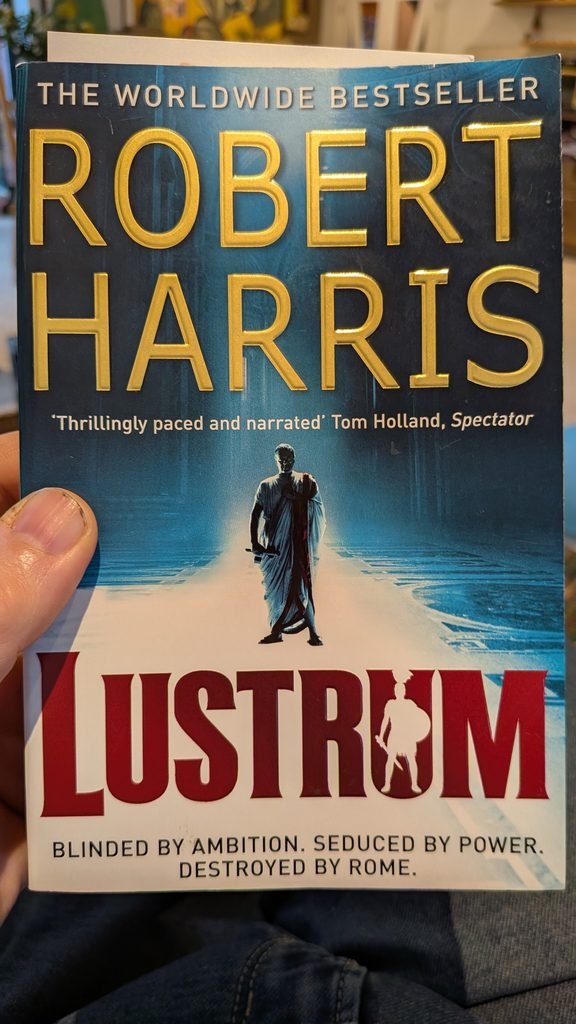
Lustrum follows Imperium in Harris’s Cicero trilogy, and it’s a brilliant read. The same combination of fictional imagination overlaid on historical evens in the late Roman Republic, it delivers even better entertainment.
We continue to follow Cicero, genius lawyer and politician, as told by his slave and secretary Tiro. The cast of characters draws in some of the biggest names in world history, namely Julius Caeser who becomes Cicero’s nemesis, and one of Rome’s greatest generals Pompey the Great.
The scale of the underlying story and its dramatis personae is breathtaking. Rome at this point had a population of around 1 to 1.5 million citizens and ruled over an enormous and (thanks to military leaders such as Pompey) ever growing territory. The descriptions of triumphs – the celebratory parades awarded to conquering generals on their return to Rome – are incredible in their size:
A skilled man at that time might work an entire day in Rome and at the end of it count himself lucky if he had earned one silver drachma. Pompey had laid out open chests on glistening display that morning which contained seventy-five million silver drachmae: more than the annual tax revenue of the entire Roman world. And that was just the cash.
The skill of Harris’s writing breathes life into this amazing ancient culture, and while reading you really feel present in that world of power and intrigue. The story seems to flow faster as the book progresses, largely due to the real historical events ramping up to mind-boggling levels. The underlying lesson appears to be if you seek power, be careful what you wish for…